Harmony Pet Services
From word of mouth to a brand on the move.
A pet care business ready to grow beyond referrals. I built a cohesive identity across its website, printed materials and car signage — turning everyday journeys into brand awareness.
Client
Harmony Pet Services
Role
Designer — brand, web & print
Scope
Identity, web design, WordPress, print, car signage
Year
2025
My role & contributions
One friendly, recognisable identity — carried from the screen to the street.
- Visual identity and guidelines
- Website design and WordPress build
- Printed materials
- Car signage
01 — Visual identity
A pet taxi you can spot from across the street.
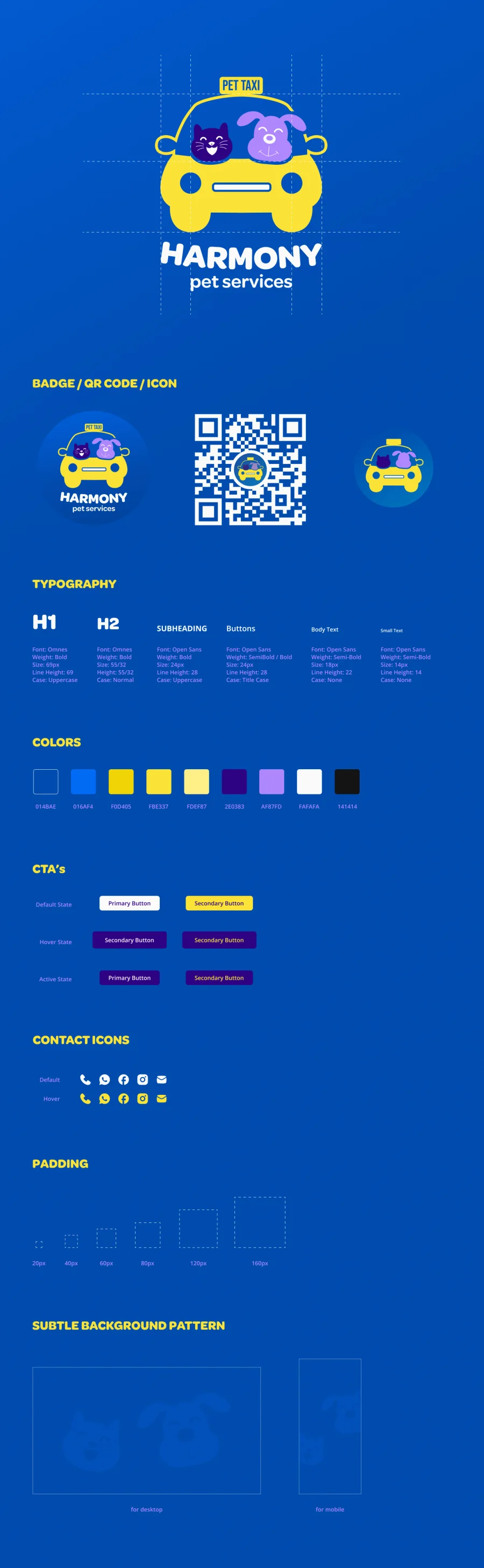
A yellow taxi carrying a smiling cat and dog, set on a deep blue. The mark works as a full logo, a round badge, a QR code centre and an app icon.
The guidelines cover typography, colour, button and icon states, spacing and a subtle background pattern — so every new page or print piece stays on-brand.
02 — Website
Real photos, clear prices, people you can trust.
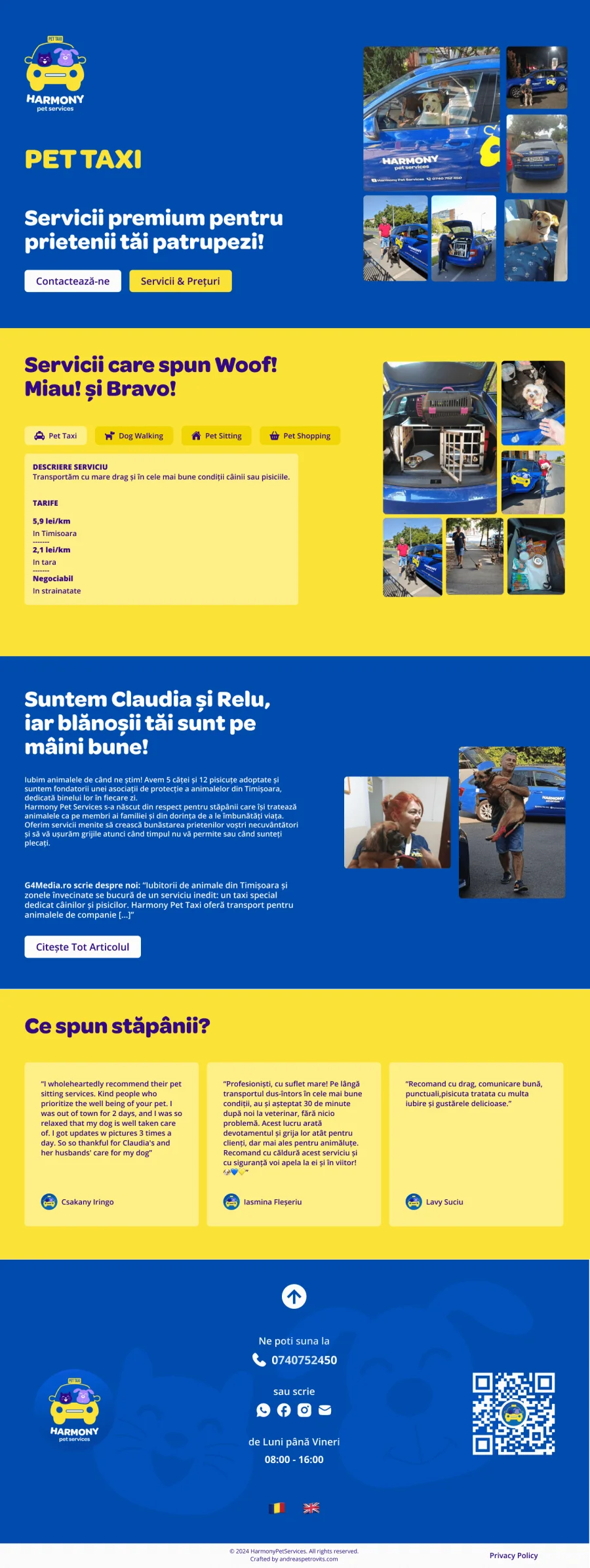
Designed in Figma and built in WordPress. The site leads with the pet taxi and real photos of the car on the road, then lays out every service with its prices.
The founders, a press mention and customer reviews follow — the reasons a pet owner hands over their animal. Phone, WhatsApp and social links sit in every footer.
03 — Car signage
Every journey is an advert.
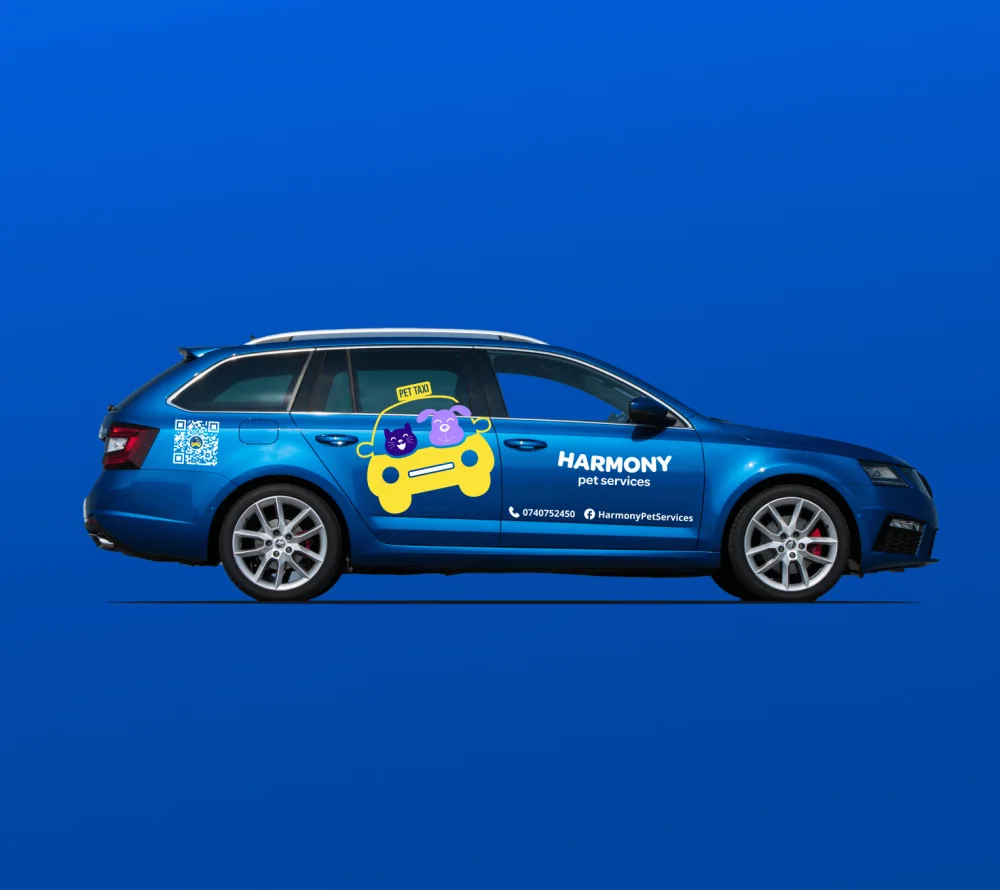
The pet taxi itself carries the brand: logo, name, phone, Facebook and a QR code that leads to the website — so every trip across town works as brand awareness.